

Hurricane response
Overview
Hurricanes are not unprecedented in St. Petersburg. They are a permanent feature of life on Florida’s Gulf Coast. The job of city government is not to be surprised when storms come; it is to be ready before they arrive, to communicate clearly during and after, to recover quickly, and to invest in the infrastructure that determines how badly the next storm hurts.
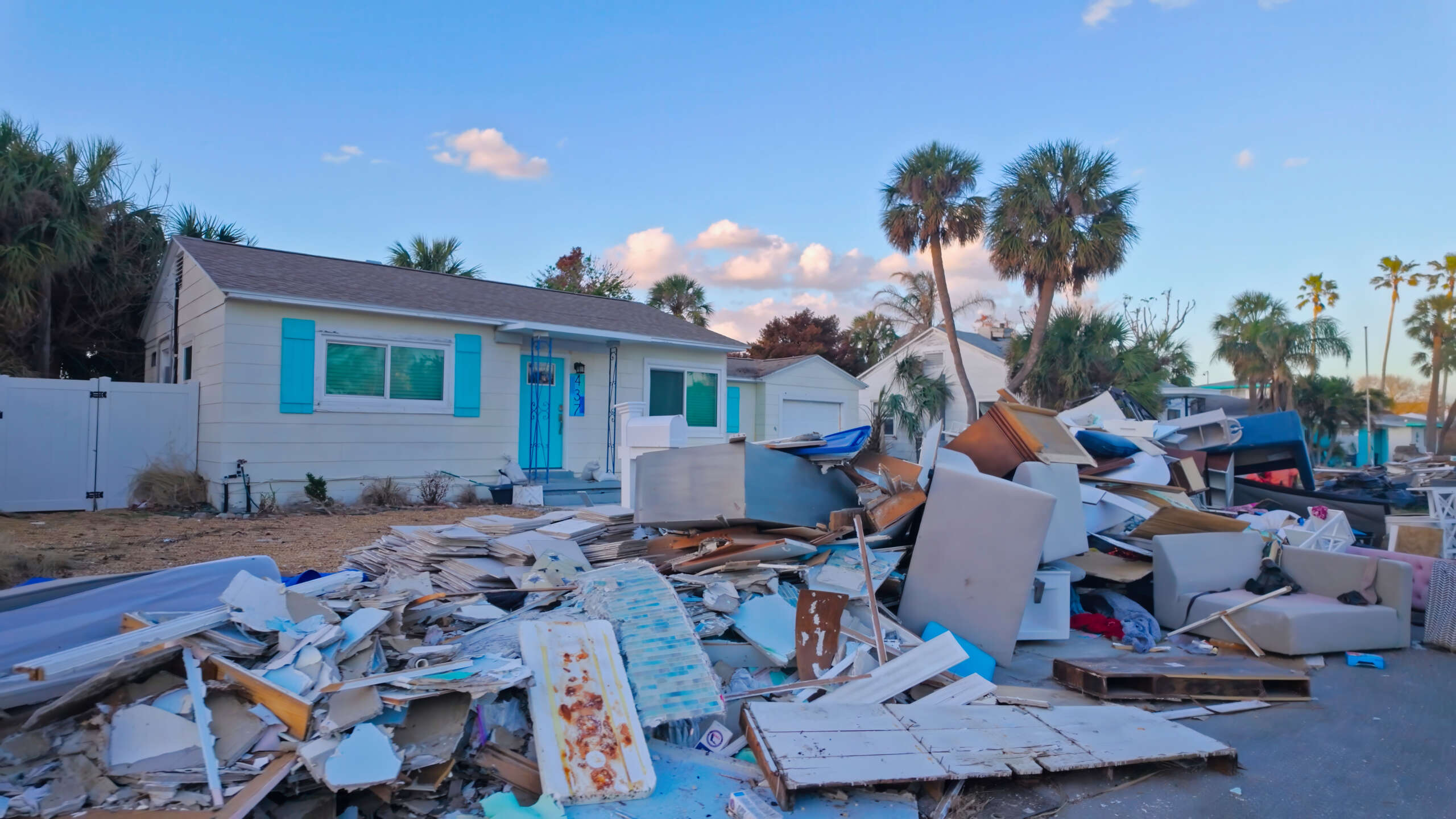
By those standards, the city failed our residents during Hurricanes Helene and Milton in 2024. Critical infrastructure failed in ways the city had known about for years. A quarter of St. Pete’s population lost sanitary services for nearly two days, with raw sewage coming up through manholes in their neighborhoods. Forty water mains broke during Milton, triggering a citywide boil water notice that extended into Gulfport, South Pasadena, and Lealman. Communication broke down. Debris piles sat for weeks while residents in the hardest-hit neighborhoods organized and paid for their own pickup, and even then, the city made it difficult to dump that debris at municipal sites. Permitting delays kept families from rebuilding.
Residents deserved better. They deserve better the next time.
I’m bringing to this work three things the current administration has not: a long record of leading Florida through major disasters, a clear-eyed diagnosis of what actually went wrong in 2024, and specific operational reforms ready to implement on day one.
A. Communication: Residents Will Know What’s Happening
When a storm is coming, when it’s here, and when it’s gone, residents need accurate, timely information about evacuation orders, shelter locations, water and sewer status, debris collection schedules, and recovery resources. In 2024, too many St. Pete residents got that information too late, from the wrong sources, or not at all.
The most striking example: when the city shut down the Northeast Water Reclamation Facility on the night of Hurricane Helene, leaving 25% of the city unable to flush a toilet for nearly two days, the City Council member representing the affected district learned about it minutes before the public did. The Mayor’s defense at the time was that the affected area was already under a mandatory evacuation order. But much of the affected area, including homes east of I-275 and north of 30th Avenue North, was not under evacuation orders at all. Residents in those neighborhoods had no warning that they were about to lose sanitary service. Many were already without power, flooded, and unable to leave.
This was not a communication accident. It was a communication failure rooted in a city government that did not see informing residents and their elected representatives as a core responsibility during an emergency.
As Mayor, I will rebuild that responsibility from the ground up. In my first 100 days, I will implement four specific communication reforms:
1. A citywide opt-in text alert system. Pinellas County operates Alert Pinellas. Other Florida cities have deployed similar tools. St. Petersburg residents should be able to receive critical alerts (evacuation orders, shelter locations, water and sewer status, debris collection schedules, boil water notices) directly to their cell phones. Cellular service was the most reliable communication channel during 2024. Our communication strategy needs to reflect that reality.
2. Information kiosks in high-traffic neighborhoods. Tampa and other Florida cities have deployed physical information kiosks during and after storms (at libraries, recreation centers, places of worship, and other community gathering points) to reach residents who may not have phone service. Kiosks display recovery resource information, debris pickup schedules, and contact information for city services. Proven vendors who provide and maintain these systems already operate across Florida.
3. Door-to-door outreach using existing city staff. Other Florida cities have repurposed Parks and Recreation staff, Code Enforcement officers, and other employees in the immediate aftermath of major storms to leave door hangers with recovery resources, identify residents who need direct assistance, and provide a human point of contact for neighborhoods that feel forgotten. St. Pete has the staff. We just need to deploy them.
4. Real-time, neighborhood-specific debris collection dashboard. Tampa, Hillsborough County, and Pinellas County all gave residents specific information during 2024 about when their neighborhood would be served by debris collection. St. Petersburg’s debris tracker did not. Yellow dots indicating activity meant different things at different times, and residents had no reliable way to know when their street would be picked up. As Mayor, I will deploy a working dashboard on the model of what other regional governments have already proven works: estimated collection start dates, real-time status updates, and clear neighborhood-by-neighborhood progress.
I will also establish a standing protocol that City Council members are briefed on operational decisions affecting their districts before the public is, not after. Residents elect Council members to represent them. They cannot do that job if they are kept in the dark by the executive branch.
B. Debris Management: A Plan, Not a Hope
After Helene, St. Petersburg was initially looking at a six-month debris collection timeline. The city eventually met FEMA’s 90-day target after Milton, but only after weeks of public outcry, after residents in flooded neighborhoods organized and paid for their own debris removal, and after thousands of families lived for weeks alongside piles of contaminated debris that posed real health risks from mold and rats.
This is not the standard St. Pete residents should expect. Other regional governments did meaningfully better. As Mayor, I will reform the city’s debris management approach in five specific ways:
1. Pre-positioned debris contracts with surge capacity built in. Federal best practice is to have multiple pre-positioned contractors with explicit surge capacity terms that can be activated immediately when a storm hits. Cities that rely on a single contractor or that negotiate after the fact pay more and wait longer. As Mayor, I will conduct a comprehensive review of the city’s existing contractor portfolio and ensure we have multiple qualified contractors with surge agreements in place before the start of every hurricane season.
2. A clear, published, neighborhood-by-neighborhood debris plan. Every St. Pete resident should know, before the next storm, how the city’s debris operation works: which neighborhoods are scheduled in which order, what the standards are for curbside placement, what contractors are responsible for which areas, and how to report problems. This information should live on the city website year-round and be updated in real time during recovery operations.
3. Maximizing FEMA reimbursement. FEMA reimburses up to 75–90% of eligible debris removal costs, but only when the city’s documentation, contractor selection processes, and operational protocols meet specific federal standards. Cities that get this wrong leave millions of dollars in federal reimbursement on the table, money that ultimately falls on local taxpayers. As Mayor, I will conduct an independent audit of the city’s FEMA reimbursement processes to ensure we are recovering every federal dollar we are entitled to.
4. Clear performance benchmarks with public accountability. Every neighborhood deserves to know what the city’s commitment is for debris collection timing, and how the city is performing against that commitment in real time. As Mayor, I will publish performance benchmarks for debris operations including target collection windows by debris type and neighborhood, and report against them publicly. Residents will be able to hold me accountable for the commitments I make.
5. Coordination with Pinellas County and state resources. The current administration has acknowledged that during 2024 it did not receive National Guard or significant state debris assistance. I have decades of relationships with state government from my time as Attorney General, Governor, and member of Congress. As Mayor, I will use those relationships to ensure St. Pete is at the table early when state and federal resources are being allocated, and that our needs are clearly communicated.
I will also work to ensure that residents who choose to handle their own debris removal have a clear, accessible, and well-staffed path to do so. After Helene and Milton, too many residents who paid for their own debris pickup found city dump sites difficult to access, with confusing rules and inadequate staffing. That is not how a city government should treat residents who are taking responsibility for their own recovery.
C. Pre-Storm Preparedness and Infrastructure Resilience
The Northeast Water Reclamation Facility was built in 1955. It sits in the lowest-lying part of the city. Its vulnerability to storm surge has been known for as long as it has existed. According to the Tampa Bay Times, the city has been on notice for at least two years that the facility could not handle the kind of storm surge Hurricane Helene delivered. Work on the $70 million remediation began in 2022, but is not expected to be complete until 2026. That meant the plant remained at known, documented risk throughout the 2024 hurricane season.
When Hurricane Helene’s storm surge arrived, the consequence was predictable: the city had to take the plant offline to prevent catastrophic damage, and 25% of St. Pete residents lost sanitary services for nearly two days. Asked about the situation, the Mayor said: “The risk has always been there. We handled it the way we thought was appropriate.”
That risk should never have been treated as something to manage. It should have been treated as a crisis to fix. And residents in the affected areas should have been told that the plant takedown was a real possibility long before they were trapped in their homes, early enough that they could factor it into evacuation decisions, prepare alternative arrangements, or simply leave.
Working families in our city deserve a Mayor who treats known infrastructure risks as urgent priorities to fix, not as conditions to manage. The lesson from 2024 is not that hurricanes are unprecedented. It is that decades of underinvestment in critical infrastructure have left us vulnerable in ways that affect every St. Pete family when the next storm arrives.
As Mayor, I will pursue infrastructure resilience as the urgent priority it is:
1. Aggressive pursuit of federal and state resilience funding. Florida cities have access to FEMA’s Hazard Mitigation Grant Program, Building Resilient Infrastructure and Communities (BRIC) funding, Community Development Block Grant Disaster Recovery (CDBG-DR) funds, and a range of state resilience funding streams. These programs fund exactly the kind of pre-storm infrastructure hardening St. Pete needs. As Mayor, I will dedicate staff capacity to pursuing every dollar of federal and state resilience funding available, reducing the burden on local taxpayers.
2. Acceleration of critical infrastructure upgrades, including the Northeast Water Reclamation Facility. When a project is essential to protecting a quarter of the city’s population from sewage backup, “wrap up by 2026” is not an acceptable timeline if it can be accelerated. As Mayor, I will personally lead an effort to identify whether state, federal, or alternative funding sources could pull that completion date forward, and to apply executive pressure to ensure the project does not slip further.
3. Tree canopy management as resilience infrastructure. A meaningful share of the 38+ water main breaks during Milton were caused by tree fall: falling trees lifted roots and broke the surrounding pipes. The city’s tree canopy is one of its great assets, but the trees on city property need to be actively managed for storm resilience: pruned, assessed for health, and where necessary replaced with species better suited to coastal storm exposure.
4. Stormwater infrastructure prioritization in flood-prone neighborhoods. Shore Acres, Riviera Bay, Snell Isle, Edgemoor, and other low-lying neighborhoods have borne the brunt of repeated flooding. Stormwater infrastructure investment in these neighborhoods cannot wait for the next major storm. As Mayor, I will work with the City Council to ensure stormwater capital priorities reflect the actual risk distribution across the city.
D. Leadership and Accountability: Showing Up When It Matters
When a major storm hits St. Pete, the Mayor’s job is to be visible, accessible, and present. To be at the Emergency Operations Center, not at home. To visit the hardest-hit neighborhoods early and often. To answer questions directly. To make decisions quickly. To communicate honestly with residents about what the city can and cannot do, and when help will arrive.
As Mayor, I will be present. During declared emergencies, I will be at the Emergency Operations Center alongside the staff doing the work. I will visit affected neighborhoods within the first 48 hours of safe access. I will hold daily press briefings during active emergencies and twice-weekly briefings during the recovery period. I will be available to City Council members, neighborhood association presidents, and residents with urgent concerns.
The Mayor’s job during a disaster is not optional. I will treat it that way.
I will also bring performance accountability to the city’s emergency operations more broadly. Every year before hurricane season, my administration will publish a public report on the city’s storm preparedness: contractor agreements in place, infrastructure investments completed, communication systems tested, and any identified gaps. After every major storm, my administration will publish an after-action report identifying what worked, what didn’t, and what we will do differently next time. Residents deserve to know.
My Record
I have led Florida through major disasters before, and I know what serious disaster leadership looks like.
As Florida’s Attorney General, I established the Attorney General’s Hurricane Task Force, which mobilized criminal and civil investigators statewide to investigate price gouging complaints. I created the Price Gouging Hotline in the wake of Hurricane Charley. The hotline has seen heavy use during multiple storm seasons since then, and continues to operate today.
My office filed price gouging lawsuits against hotels, generator businesses, tree removal companies, and other bad actors who exploited residents during their most vulnerable moments. As a result of the work my team began, the Florida Office of the Attorney General continues to investigate every allegation of price gouging, comparing reported prices during a declared state of emergency to the average price charged in the 30 days prior. Violators face civil penalties of $1,000 per violation and up to $25,000 for multiple violations in a single 24-hour period. The system I helped put in place has protected Floridians through every major storm in the nearly two decades since.
As Governor, the Division of Emergency Management became a direct reporting entity to the Executive Office of the Governor. I oversaw the statewide response to emergency management throughout my term, and Florida’s emergency response infrastructure became one of the most respected in the nation. The Director of Emergency Management who served in my administration was so accomplished he later went on to lead federal emergency management.
As Governor, I also presided over the state’s recovery from the tragic Deepwater Horizon oil spill, which led to a declared state of emergency in 26 counties across the state, including here at home in Pinellas County.
I created an Economic Recovery Task Force to help Florida’s businesses recover from lost revenue. I secured SBA disaster loan funds for Gulf Coast businesses. I called on former Attorneys General to chair a Legal Advisory Council to explore legal options against BP, and advocated for nearly $35 million from the company to fund a tourism marketing campaign that encouraged people to return to vacationing on Florida’s beaches after the spill was contained and cleaned up. The work helped Florida’s coastal economy recover from one of the worst environmental disasters in American history.
I bring to St. Petersburg a record of leading through disaster: at the state level, across multiple major emergencies, with results residents can verify. I will bring that same seriousness to City Hall.